Repainting or paintless dent repair — which should you choose?
This is the first question we hear almost every day: "Can it be fixed without painting?" The answer depends on a few specific things — and in most cases it can be judged from a photo. Here is how we think about it.
What paintless dent repair actually is
Paintless Dent Repair (PDR) is a method where the dent is worked out from behind with specialised rods and tips, without breaking the factory paint. The metal is returned to its original shape gradually, in small steps, and the paint stays intact.
The main advantage is exactly that — the car keeps its original paint. For newer cars, and cars that will be sold on, this has real value: any added layer of paint shows up on a coating thickness gauge and affects the price.
When PDR is the right choice
Paintless dent repair works well when all of the following are true:
- The paint is intact — no cracks, no scratches down to bare metal, no flaking over the dent.
- The metal is not overstretched — shallow to medium dents with a smooth edge respond best.
- There is access behind the panel — through a door, wing or boot. On some reinforced areas access is limited.
- The damage is not on an edge or sharp crease, where the metal is considerably stiffer.
The classic cases are hail damage, dents from someone else's door in a car park, and light knocks from a shopping trolley. For these, PDR is both faster and cheaper.
When a repaint is necessary
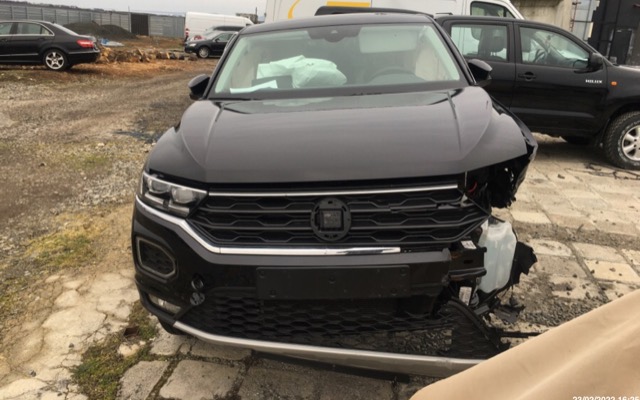
A repaint is needed when the coating is already compromised or the metal is seriously deformed:
- There is a scratch down to the primer or to bare metal — left as is, that is an entry point for corrosion.
- The paint is cracked or flaking around the impact.
- The metal is creased, stretched or torn and needs straightening, filler and primer.
- The panel is being replaced — new parts arrive primed and must be painted to match the car.
- The damage is on a plastic bumper, where PDR does not apply in the same way.
It is worth saying plainly: sometimes we combine both. We work out the main deformation to keep filler to a minimum, then paint only the affected panel. That gives a more durable result than a thick layer of filler.
How it affects cost and turnaround
PDR is almost always the cheaper and faster option, because preparation, paint and drying time all fall away. A repaint requires filler, sanding, priming, booth painting and curing — a process that cannot be rushed without losing quality.
An exact price over the phone is impossible, and anyone who gives you one is guessing. What we can do quickly is an indicative assessment from photos — send 3–4 shots of the damage from different angles in daylight, and we will tell you which of the two routes applies.
In short
- Paint intact and the dent is smooth → most likely PDR.
- Scratches to bare metal, cracks, or a replaced panel → repaint.
- Not sure → send photos. The assessment is free and takes minutes.